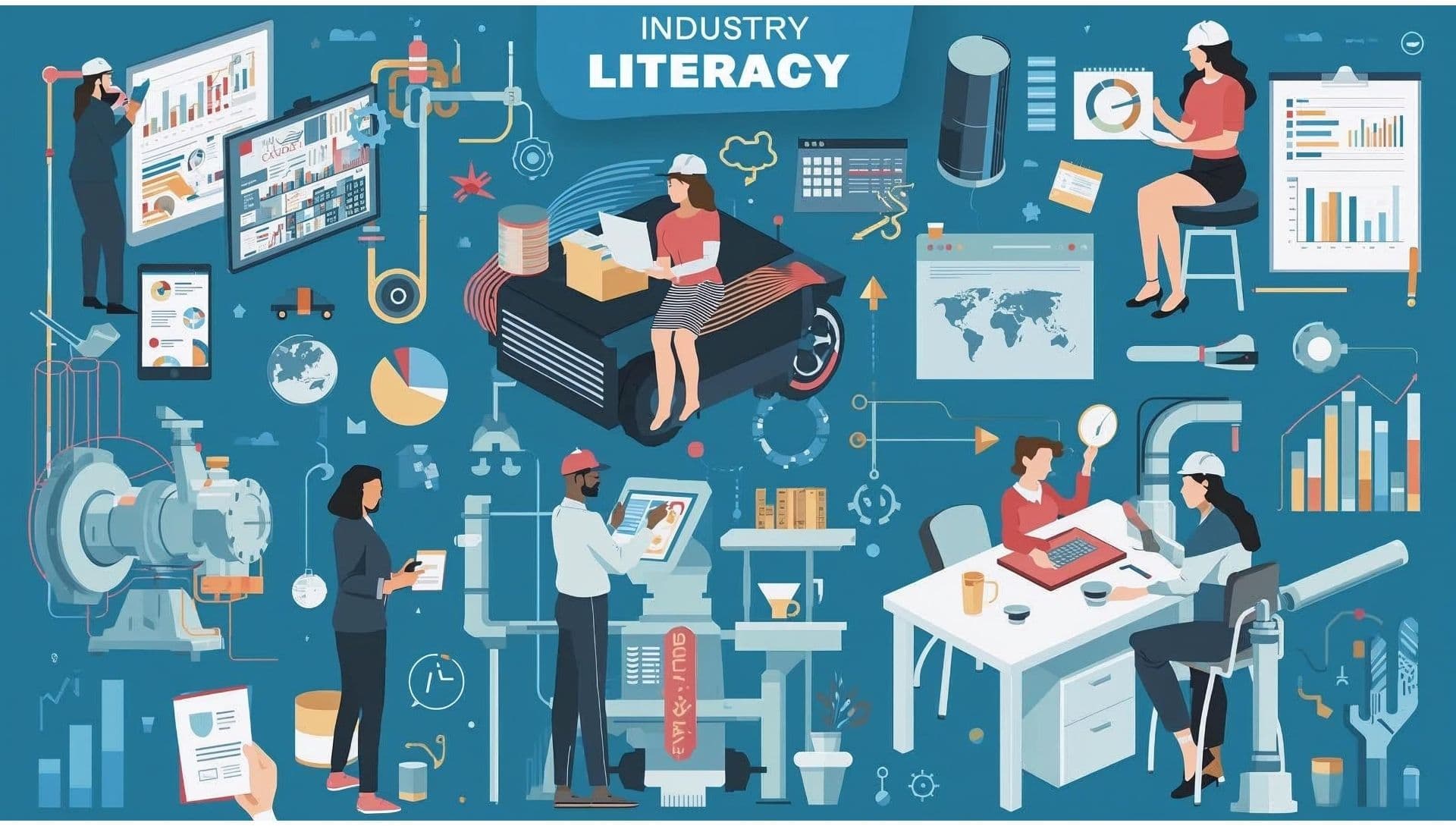

Every year, millions of students search for:
“latest job vacancies”
“best career options after graduation”
“high paying jobs in India”
“certification courses for jobs”
“skills required for industry jobs”
But very few search for something that actually determines their success:
Industry Literacy.
And that’s exactly why there is a gap between degrees and careers.
What Is Industry Literacy?
Industry Literacy means:
Understanding how industries function
Knowing how companies generate revenue
Identifying where real job opportunities are created
Understanding hiring trends and skill demands
Connecting your education to real industry vacancies
Most students prepare for exams.
Very few prepare for the industry ecosystem.
Why So Many Qualified People Struggle to Find Jobs
Let’s look at reality.
There are thousands of job openings and vacancies posted every day across job portals.
Yet:
Graduates apply to 100+ jobs
They attend multiple interviews
They complete certification courses
But still struggle to secure stable careers
Why?
Because they know subjects, not industries.
A mechanical engineer may know thermodynamics.
But do they understand:
How the automotive industry makes money?
Where supply chain bottlenecks create job demand?
Why EV trends are creating new vacancies?
Which certifications actually improve hiring chances?
This is where Industry Literacy changes everything.
The Real Career Problem Isn’t Lack of Jobs — It’s Lack of Direction
Students often ask:
“Which career is best?”
“Which jobs are future proof?”
“Which course gives guaranteed placement?”
“Which certification increases salary?”
But these questions are incomplete.
The better questions are:
Which industries are growing?
Where are job vacancies increasing?
What business problems are companies trying to solve?
What skills are employers hiring for?
How is technology changing job roles?
Industry Literacy helps you answer these before you apply for jobs.
Degrees Get You Eligible. Industry Literacy Gets You Hired.
Recruiters today look for:
Awareness of industry trends
Understanding of business models
Clarity on value chains
Ability to connect role to revenue
Practical skill alignment
When a candidate understands:
Where the company sits in the value chain
What drives its profits
Where cost pressures exist
What digital transformation is changing
They stand out in interviews.
This is how you move from:
Job Seeker → Career Builder
Industry Literacy Improves Your Career Decisions
Instead of randomly applying to vacancies, you begin to:
Target specific industries
Choose meaningful certification programs
Build relevant skills
Prepare for interviews strategically
Position yourself confidently
You stop chasing “any job”.
You start building a career pathway.
The Future of Jobs Is Industry + Skills + Technology
The future workforce will not be defined by degrees alone.
It will be defined by:
Industry knowledge
Functional expertise
Technology awareness (AI, data, cloud, cybersecurity)
Communication and professional skills
That combination is what improves:
Employability
Job stability
Salary growth
Long-term career progression
Industry Literacy Is Career Insurance
Industries evolve.
Technology changes.
Some job roles disappear.
New vacancies emerge.
But if you understand:
How industries evolve
How value chains shift
How technology impacts operations
Where growth sectors are emerging
You can pivot.
That is career resilience.
Stop Searching for Jobs. Start Understanding Industries.
The internet is full of:
Job alerts
Vacancy notifications
Certification ads
Career advice videos
But very few platforms teach:
How industries actually work.
And without that foundation, careers become reactive.
Industry Literacy gives you:
Clarity
Confidence
Competitive advantage
Career direction
Degrees make you qualified. Industry Literacy makes you valuable.

Omnivance Research Team
Dedicated to bridging the gap between education and industry requirements.
Related Courses
Deepen your knowledge with these recommended courses